This is perhaps the most well-preserved of Colorado’s ghost towns. To get here, take CR 162 past Chalk Creek and drive for about 19 miles to the town of St. Elmo. The drive itself is well worthwhile as there are spectacular views along the way, including possible sightings of the area’s year-round native inhabitants—Rocky Mountain bighorn sheep, antelope, and mule deer.
Gold was discovered in 1875 just west of St. Elmo and it wasn’t long after this discovery that the local Mary Murphy Mine became the biggest gold producer in the area. By 1881, the town and the gold had attracted 2000 residents. As more miners discovered gold, the town population continued to grow.
In December of 1880, the Denver, South Park and Pacific Railroad finally reached St. Elmo from Buena Vista. Within three years, there were approximately 50 producing mines in the area.
In the early 1880s, St. Elmo’s community of 2000 residents had three hotels, five restaurants, a drugstore, and a schoolhouse. Rich with ore, the town was a base for the workers at the Mary Murphy Mine, an operation that produced more than $60 million in gold and employed hundreds of workers.
By the 1930s, only about 300 residents remained. A fire in the summer of 2002 destroyed four historical buildings. Today, St. Elmo offers tours throughout the town, which is presently under historical restoration. Twenty-four original buildings remain and there are a total of 8—yes, eight—year-round residents in St. Elmo.
The Mary Murphy Mine was in full-time operation from 1870 to 1925 during which time it produced more than 220,000 ounces of gold—worth $4.4 million at that time, about $180 million in 2008—as well as silver, lead, and zinc. Two aerial tramways connected the mine to Romley and to the railroad.
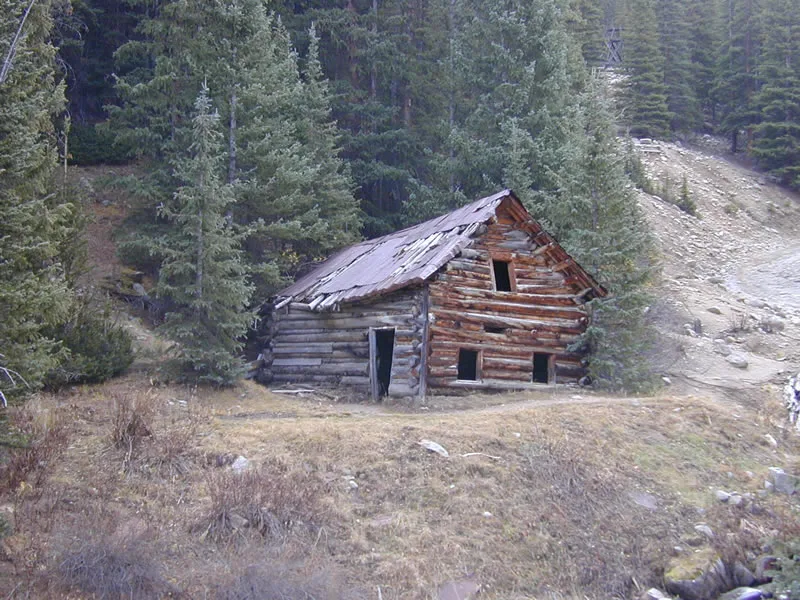
This mine is one of the more interesting historical sites in the region, especially since there have been no restoration attempts. Even though the remaining buildings are dilapidated and decayed, what remains can nevertheless act as a window into the past and allow visitors to contemplate how these hearty souls must have lived well over a century ago.
Several theories exist about the naming of the Mary Murphy Mine, but perhaps the one which best fosters one’s imagination is the report that an old Irish prospector, hospitalized in Denver in the 1870s, became somewhat close to a nurse named Mary Murphy. He may have had a premonition that he would strike it rich, but the story goes that if he did, he’d name the mine after her. The rest, as they say, is history. And, it is so romantic!
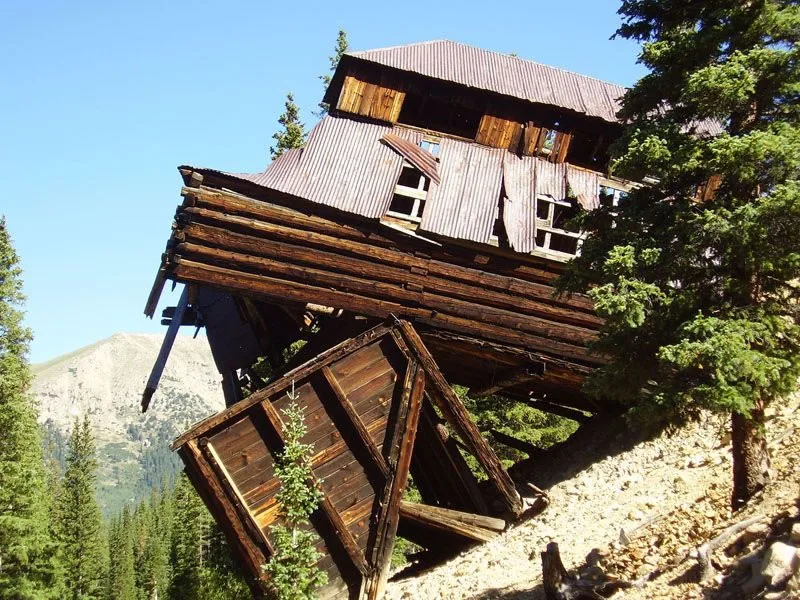
A precariously balanced structure looms over the road on the way up to Hancock.
If you make it to St. Elmo and then Romley, simply continue on for another 6 miles to reach Hancock. Getting here may require a 4wd vehicle with high clearance.
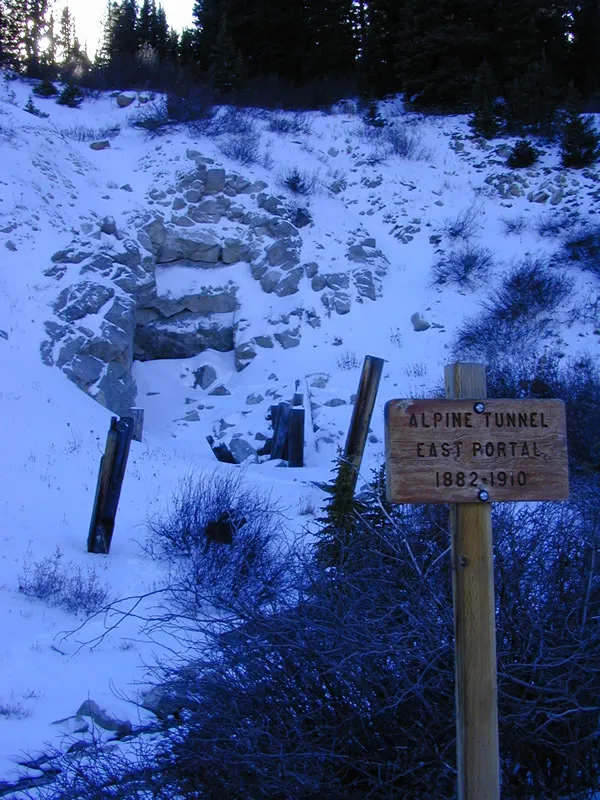
All that remains of this town are some rotting foundations of buildings. Extreme weather conditions eroded the buildings over time, destroying the structures that once housed the Alpine Tunnel workers. This passageway was the first tunnel ever constructed that ran through the Continental Divide. When completed in 1881, it was 1800 feet long.
In its hey day, Hancock boasted five stores, several hotels, many saloons and restaurants, and two saw mills, all of which serviced its almost 200 full-time residents. Miners earned $2.50 per day working in the surrounding mines.